
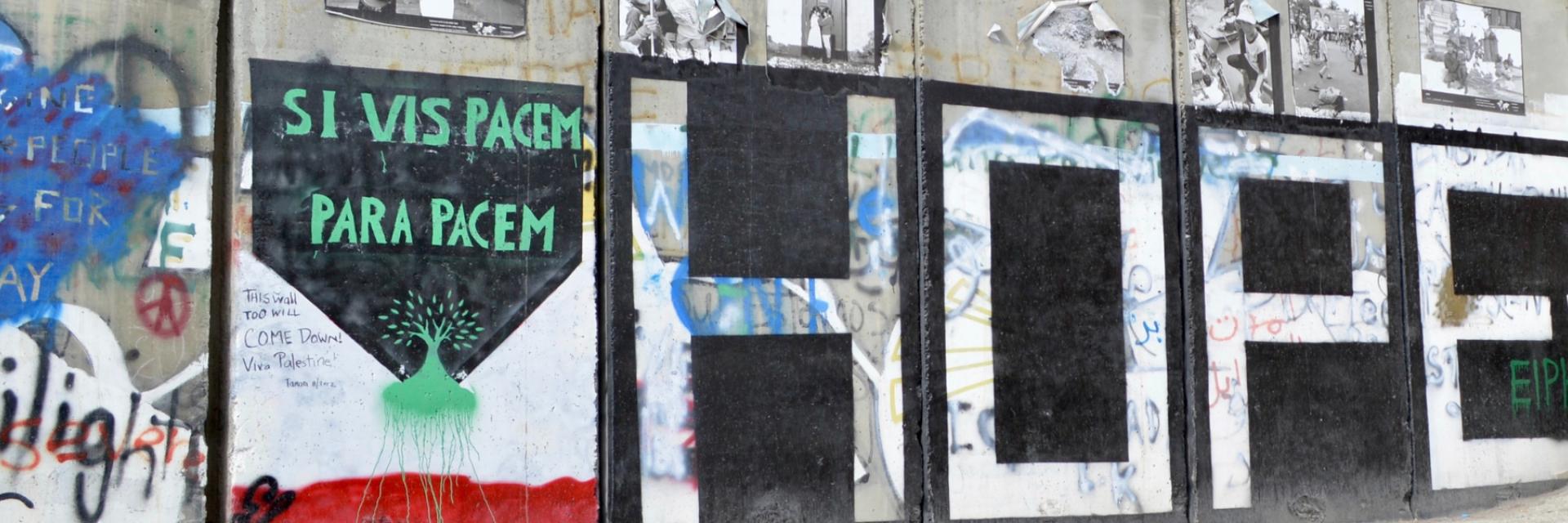

Since October 7, 2023, grave crimes have been committed against Palestinians in Gaza and the West Bank. In Gaza, where 90% of the population has been displaced, tens of thousands of people - mostly women and children - have been killed or wounded, and global food security experts warn of a man-made famine, a catastrophic atrocity is unfolding.
Why Memory Matters in Palestine and Beyond conversation series
The “Why Memory Matters in Palestine and Beyond” conversation series aims to examine and question why the world has failed to stop these atrocities, what are the driving forces that have led to this situation, what is needed to confront it, and much more, through the lens of memory, which is at the core of the work of sites of conscience. Uncovering the root causes of violence and injustice is at the heart of ICSC's work around the world. Believing in the vision of harnessing the power of memory to dismantle the deep-rooted, systemic inequalities and prejudices that shape societies, the Coalition strives to apply the same approach to the Israeli-Palestinian context and invites everyone to join the effort.
The first part of the two-part project was released this week as a podcast conversation series. Hafıza Merkezi has prepared Turkish subtitles for the first four episodes of this conversation series - the subtitled conversations are available on the ICSC YouTube account. These conversations focused on the root causes and false narratives that have led to the atrocities in Palestine today, with guest speakers including member sites of conscience, academics, human rights defenders, and cultural heritage experts.
In the second part, a webinar will bring together members and partners of Sites of Conscience who have faced similar injustices in Bangladesh, South Africa, Northern Ireland and elsewhere to share their thoughts and experiences on the conversations in the study. On January 21-22-23, starting at 18.00 and lasting for six hours, participants will have the opportunity to share their thoughts and experiences about the conversations in the series. More information about the coalition's work and the webinar can be found at www.sitesofconscience.org.
Conversations with Turkish subtitles
Below you can find information and links to four of the six talks in the“Why Memory Matters in Palestine and Beyond” series, for which Hafıza Merkezi provided Turkish subtitles.
The first conversation was with Professor Ilan Pappé , Israeli historian and Professor of History at the School of Social Sciences and International Studies, University of Exeter. Pappé discussed the historical contexts that are critical to understanding the Israeli-Palestinian situation. To this end, he examined efforts to de-historicize events and how traumatic memories are weaponized.
In the second conversation, Marianne Hirsch, William Peterfield Trent Professor of English and Comparative Literature at the Institute for the Study of Women and Gender at Columbia University, discussed how the remembrance of traumatic events can be used to justify violence or reinforce prejudiced ideologies. She also discussed the concept of connective memories, where different traumatic historical events intersect and coexist.
In the third conversation, Professor Sahar Aziz, a distinguished professor of law and Chancellor's Scholar for Social Justice at Rutgers Law School and founding director of the Center for Security, Race and Rights, discussed how racist stereotypes about Palestinians and Muslims are used to promote discriminatory policies and practices. She also discussed the links between Islamophobia and antisemitism and how antisemitism is used as a tool to defame Palestinian rights defenders.
In the fourth conversation, Yara Hawari, co-director of al-Shabaka Palestine Policy Network, discussed how Palestinians have been dehumanized in the media for decades and how this has paved the way for the acceptance of atrocities against Palestinians, and how basic principles of journalism have been abandoned in media coverage of Palestine.