
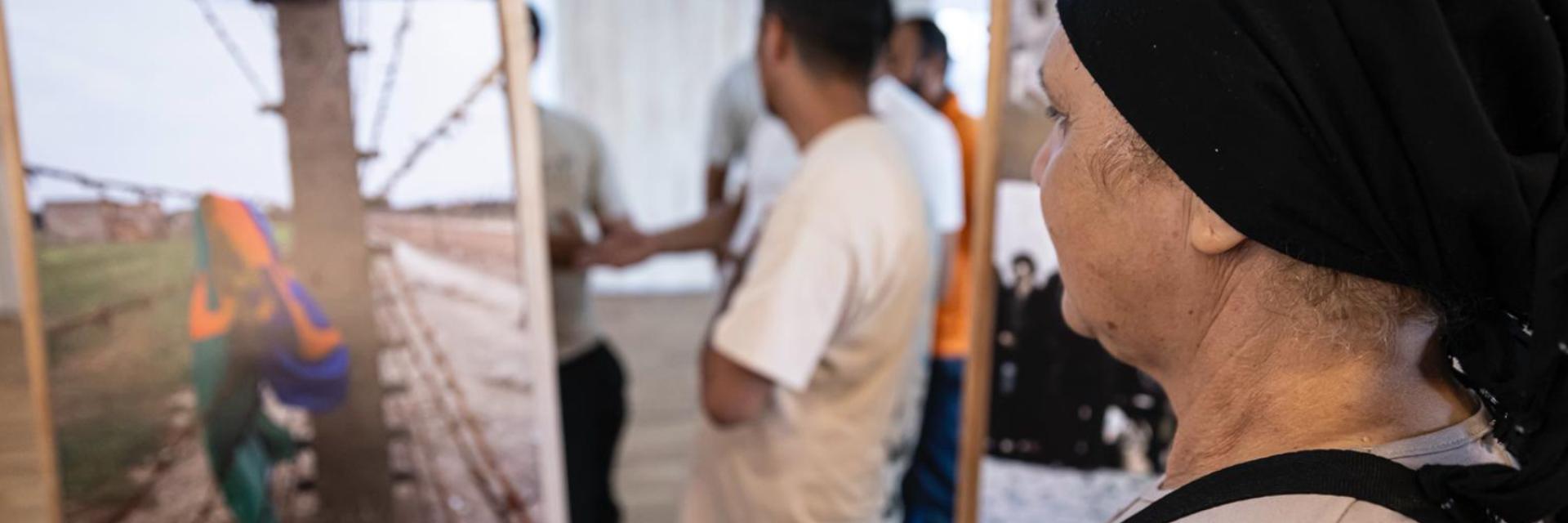

On Saturday, 2 August, an event was held at the Ataşehir İnal Aydınoğlu Cultural Centre to commemorate the hundreds of thousands of Roma and Sinti who lost their lives during the ‘Porajmos’ (Roma Genocide) systematically carried out by the Nazi regime.
The Romani Godi Association, the Istanbul Romani Rights Federation, and the Ataşehir Municipality aimed to strengthen social memory through this event, ensuring that the past is not forgotten and that such events are never repeated.
‘Porajmos: Those Who Must Not Be Forgotten’ Exhibition
As part of the commemoration programme, a photo exhibition titled ‘Porajmos: Those Who Must Not Be Forgotten’ was also opened. The exhibition, which remained open for three days, featured testimonies from survivors of the Romani Genocide, photographs from the period, archival documents, and informative content about the genocide process.
A lament music recital
As part of the commemoration programme, laments from Romani culture, including Jelem Jelem, were also performed.
At the panel discussion titled ‘Memory, Porajmos, and Remembering Together,’ the Roma communities' struggle for memory, stories from the genocide, the importance of cultural resistance, and the effects of Porajmos on the present day in the context of human rights were discussed.
* On 2 August 1944, the last 4,300 Romani women, children, and elderly people remaining at the Auschwitz-Birkenau concentration camp were killed in gas chambers, leading to this date being recognised as a day of collective memory and mourning for the Romani people.