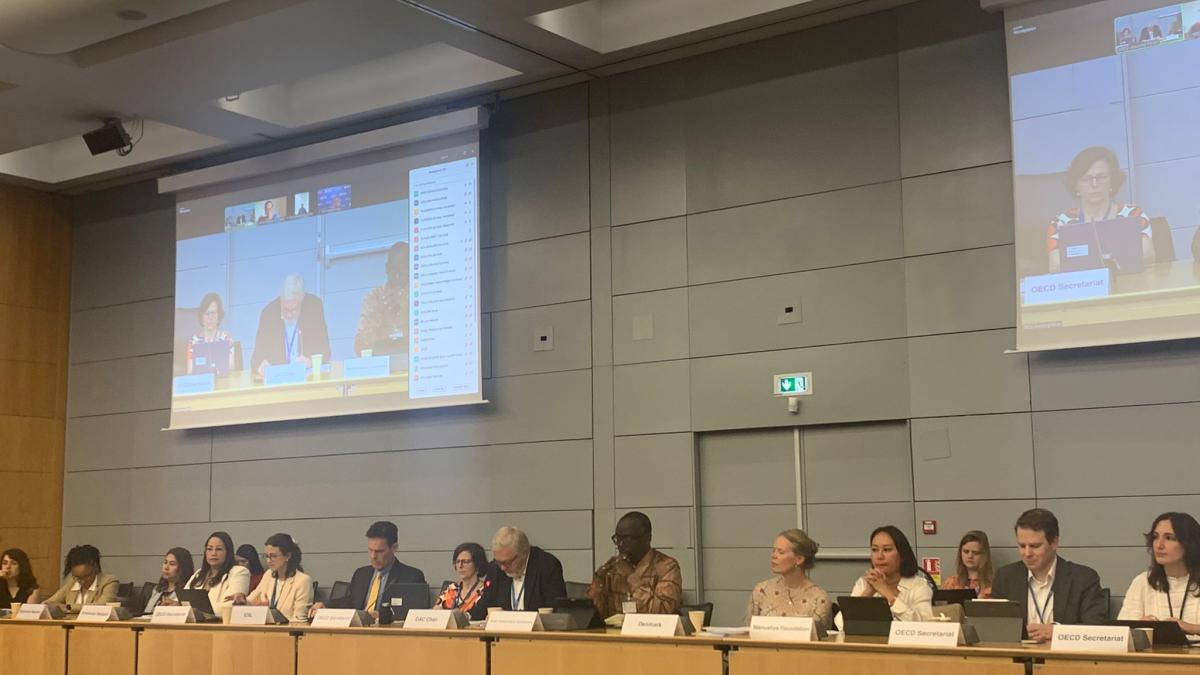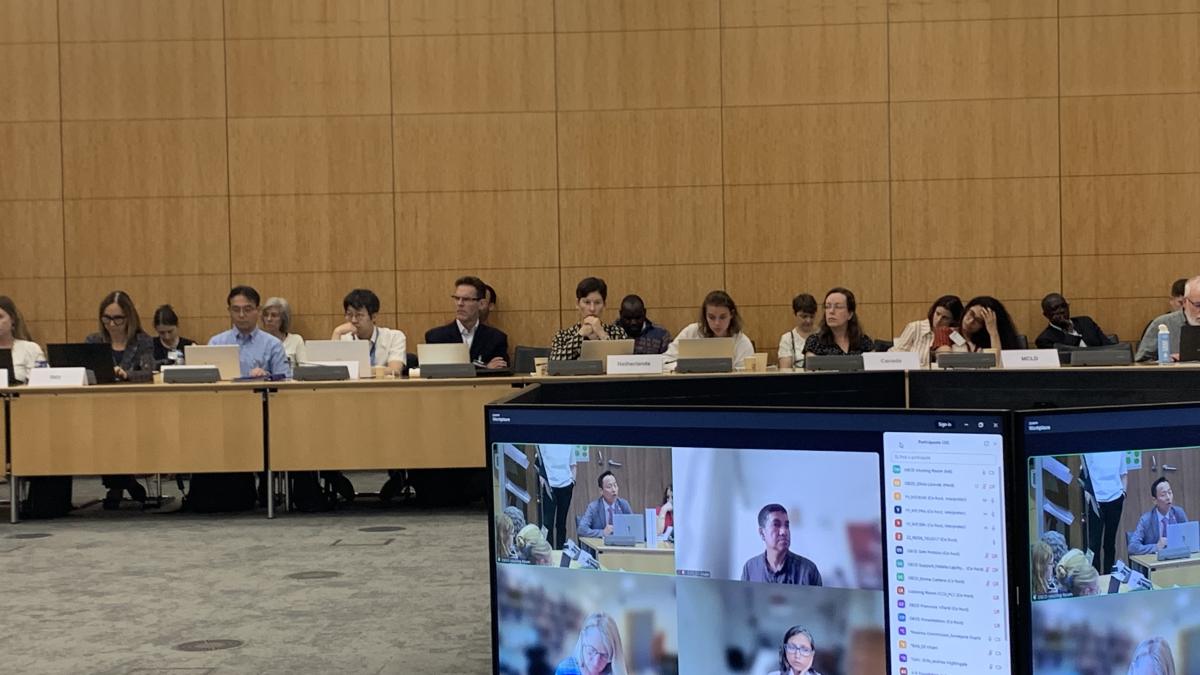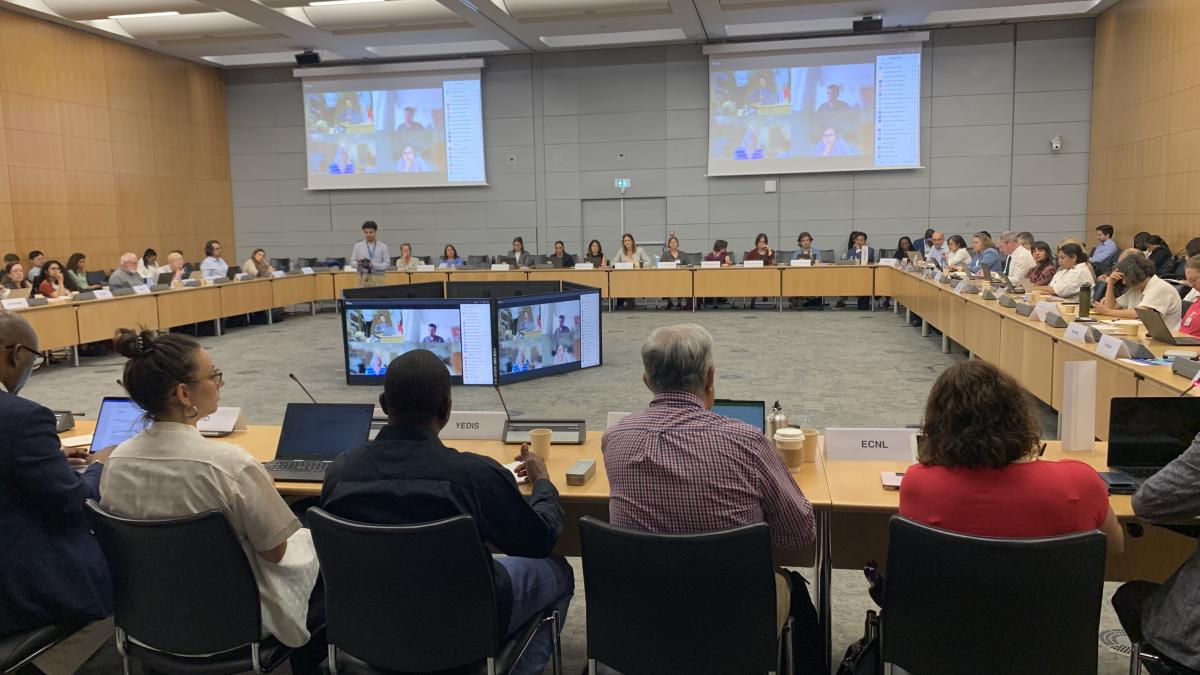


In his speech, Carsten Staur, Chair of the OECD DAC, emphasized the need to approach development from a long-term and global perspective, while Mary Beth Goodman, Deputy Secretary-General of the OECD, drew attention to the importance of coordinated action in protecting democracy and good governance. Aidan Eyakuze from the Open Government Partnership noted that the expected progress in civil society participation in decision-making processes had not been achieved.
One of the highlights of the first day of the meetings was the “Recommendation on Strengthening Civil Society in Development Cooperation and Humanitarian Assistance,” which was adopted in 2021. Although not legally binding, this recommendation outlines member states' obligations and political intentions regarding the strengthening of civil society. During the sessions, steps to disseminate and implement the recommendation were shared; while it was reported that new policies were being developed in countries such as France and Germany, it was emphasized that more progress was needed in some countries.
Three guidance documents prepared on the recommendation—funding, power-shifting, and protection of the civil sphere—were shared with participants. In addition, while good examples were presented in areas such as civil society participation in decision-making processes, localization, and transparency, concerns were also raised about democratic backsliding, funding cuts, and the shrinking of civil society space. In this context, participants held discussions in three separate groups.
Hakan Ataman, monitoring and advocacy expert participating in the meeting on behalf of STGM, reminded that although Turkey is a member of the OECD, it is not among the 33 countries that are members of the OECD DAC, and pointed out that stronger cooperation at both the national and international levels is needed for the Recommendation to be effective in Turkey.
Advocacy Crime, Solidarity Threat
In his speech, Carsten Staur, Chair of the OECD DAC, emphasized the need to approach development from a long-term and global perspective, while Mary Beth Goodman, Deputy Secretary-General of the OECD, drew attention to the importance of coordinated action in protecting democracy and good governance. Aidan Eyakuze from the Open Government Partnership noted that the expected progress in civil society participation in decision-making processes had not been achieved.
David Moore, Deputy Director of Legal Affairs at ICNL (International Center for Not-for-Profit Law), moderated the first day's session titled “Protecting the Civil Space in a Turbulent World.” Moore recalled that the shrinking of the civil sphere has been discussed for nearly 20 years, noting that over the past five years, 300 legal regulations affecting civil society have been enacted in 80 countries, 85% of which are restrictive in nature. He emphasized that these regulations are not limited to authoritarian regimes, but that similar trends are also seen in established democratic systems.
Moore highlighted four trends in particular:
- Foreign agent laws: Five countries enacted such regulations in 2025 alone.
- Criminalization of advocacy: Rights defenders are being prosecuted for their activities.
- Digital authoritarianism: Restrictions on the internet and digital communication are becoming widespread.
- Security measures: Activities such as advocacy and fundraising are beginning to be seen as security threats.
In the discussion section, STGM General Coordinator Tezcan Eralp Abay drew attention to the identity crisis that civil society is experiencing on a global scale, in addition to these trends. Noting that civil society, which has grown stronger as a democratic actor over the past two decades, is now faced with a gap between rhetoric and practice, Abay said that even this positive rhetoric has remained silent in cases such as the humanitarian crisis in Gaza.
Abay said, "Today, we are faced with a twofold challenge: to maintain the internal consistency of strong discourse and to develop norms, mechanisms, and tools that will translate this discourse into concrete practices."
Day Two: Resilience Mechanisms, Localization, and Financial Sustainability
During the second day sessions held on June 19, 2025, the structural challenges faced by civil society, strategic responses, and opportunities for collaboration were discussed from multiple angles. In particular, topics such as the shrinking space for civil society, safeguarding legitimacy, barriers to accessing funds, the safety of women's rights advocates, and local-level climate adaptation were highlighted.
Under the heading of climate justice, local projects led by women in countries such as Kenya and Indonesia—including land rehabilitation, early warning systems, and infrastructure development—were shared as best practices. These models, developed in collaboration with local governments, highlighted women's contributions to environmental justice.
Regarding the monitoring of the civil sphere, data tools such as the OECD's “Civil Society Survey” were introduced. It was noted that these tools aim to make not only legal regulations but also gaps in implementation visible and provide policymakers with comparative analysis.
In terms of financial sustainability, it was stated that donors need to develop more flexible and long-term support mechanisms. From a localization perspective, it was emphasized that social movements and informal structures should also be included in funding systems. However, it was noted that in many countries, small-scale organizations face difficulties in accessing funds and that participation processes remain superficial.
Warnings were issued that women's human rights defenders are working under increasing risks. In the case of Thailand, it was reported that individuals supporting refugee women activists have faced state pressure. In response to such risks, it was stated that special visa and support mechanisms for human rights defenders should be developed.