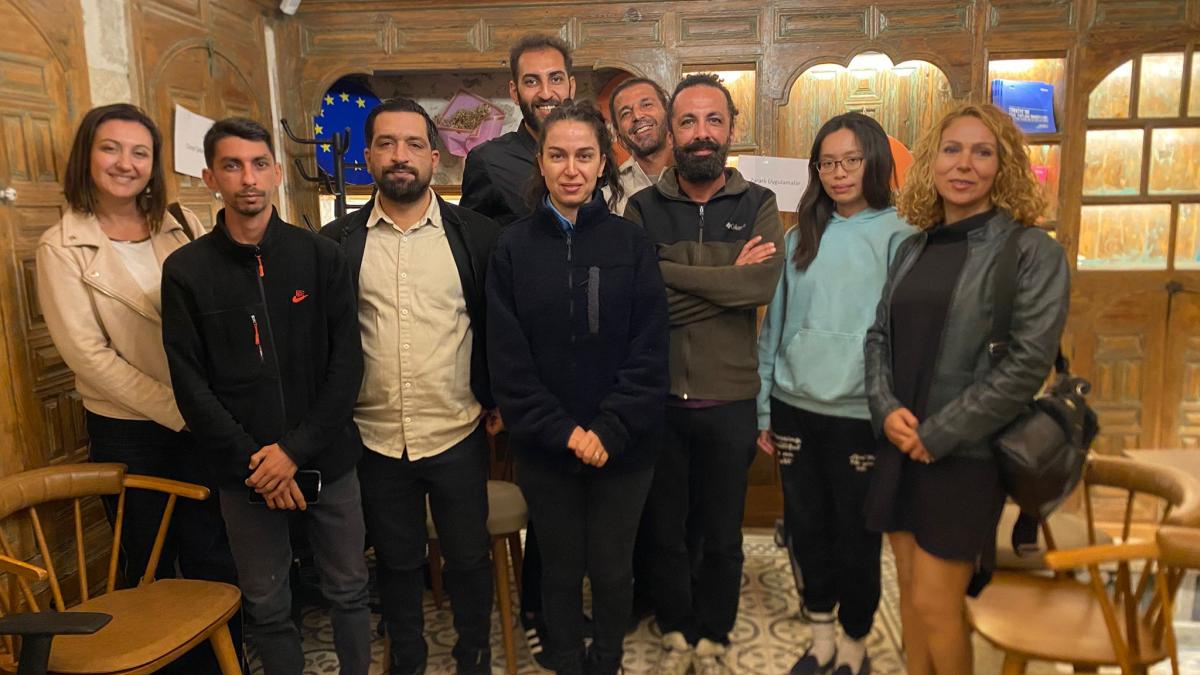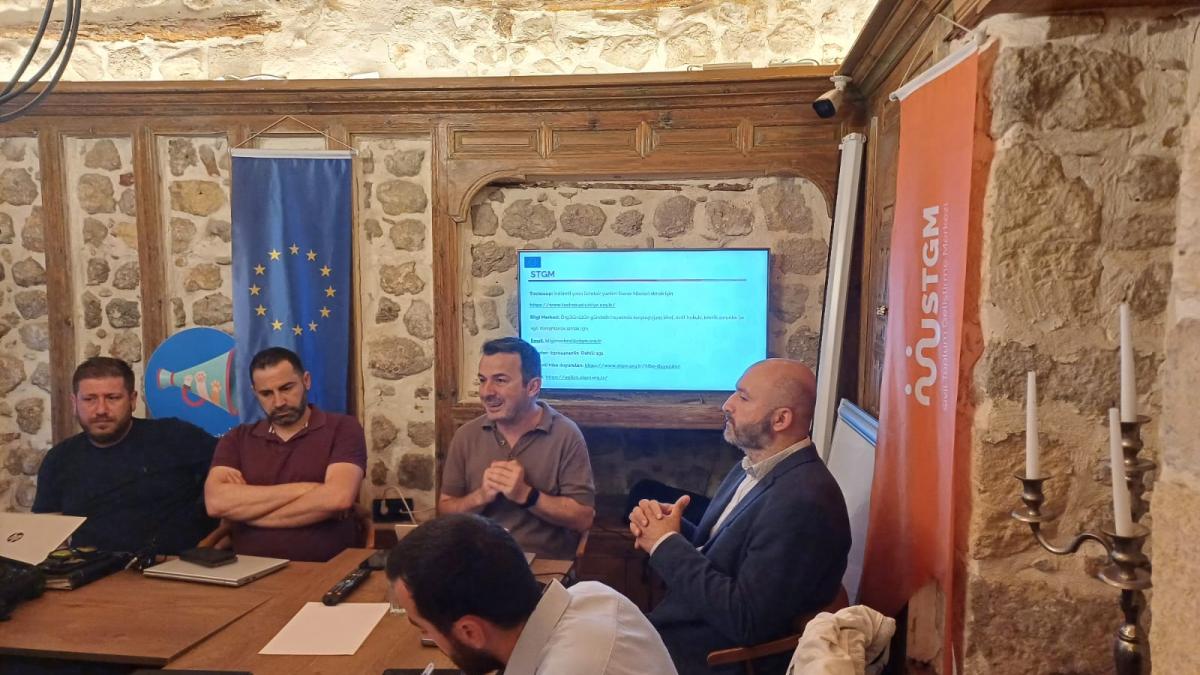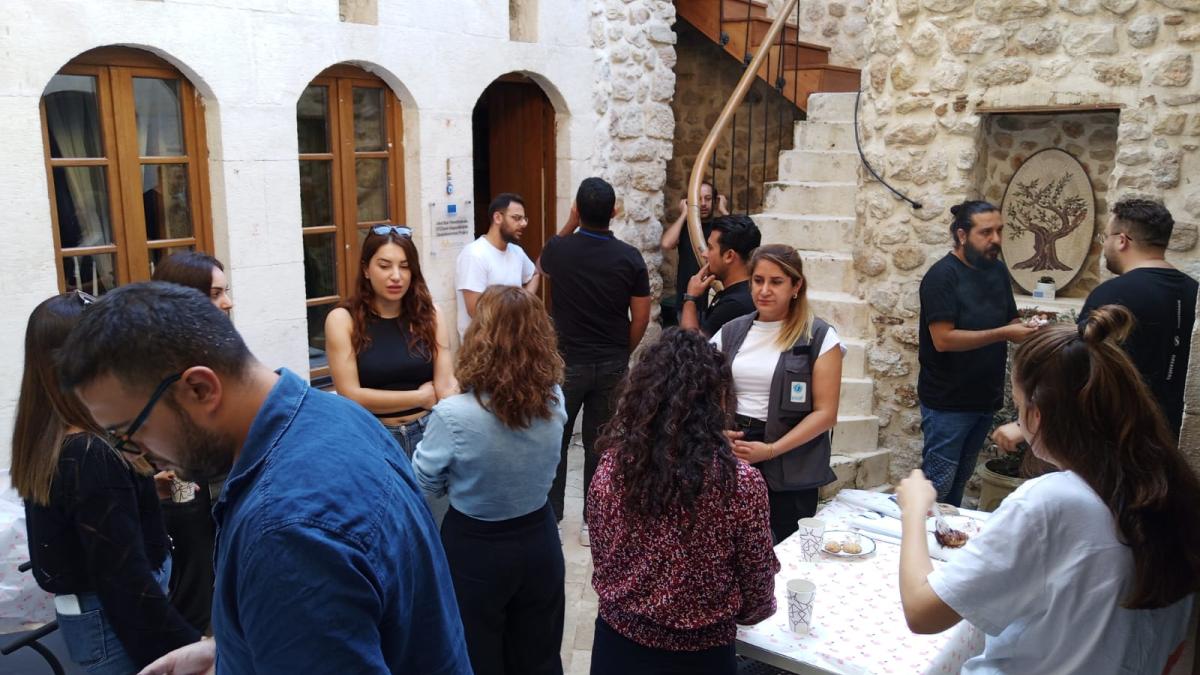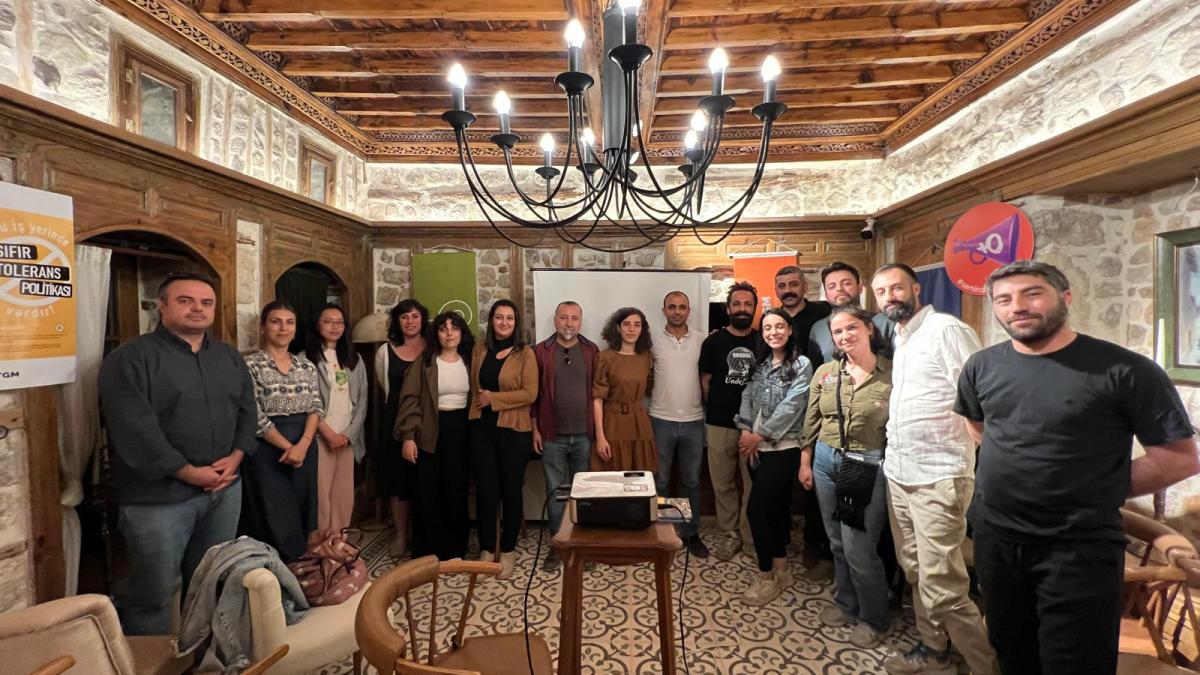


Today marks the first anniversary of our Antakya Office. Opened as part of the “Supporting the Capacity of Civil Society Organizations in Disaster Risk Management” project supported by the European Union, our office has, over the past year, become a living space where many CSOs come together, collaborate, and strengthen solidarity. We talked about this first year with our field coordinator Canan Aygün and project assistant Barbaros Duman.
What was the most empowering moment in the time that has passed since the earthquake?
Canan: The time that has passed since the earthquake doesn’t usually fit into a single moment. The destruction experienced in Antakya was the same way. What was empowering wasn’t an abrupt realization, but being part of a slow process, woven with labor and patience.
Many old Antakya houses, which carried the city's historical memory, were destroyed in the earthquake. The STGM Antakya Office building, however, survived as one of the few remaining structures and continued to exist not only as a physical space but also as a symbol keeping the city’s memory alive. When I first encountered the STGM Antakya Office, the building was still intact; but to make it usable again, everything from the electricity to the water installations, from kitchen supplies to evacuation systems, needed repair. This was, in fact, the reconstruction process of the Antakya Office itself. Being actively involved in every stage, and seeing at the end that the office was fully usable, became one of the experiences that made me feel strongest.
Barbaros: For me, the most empowering moments were when I realized that solidarity had truly taken shape. After the earthquake, those in difficult circumstances supported those even worse off, without thinking about their own situation. The moments when resources were shared and everyone put forward what they had were important. This state of solidarity helped things progress and made us feel we weren’t alone. It was empowering to see that, amid the uncertainty caused by the disaster, it was possible to move forward together.
“This is a place to breathe”
What was the condition of the city when the Antakya Office opened? How do you think this office filled a gap in the city and in civil society?
Canan: At the time the STGM Antakya Office opened, the city was still in ruins. The reconstruction process hadn’t started yet. This provided a temporary convenience in terms of transportation and use of space. The STGM Antakya Office filled a significant gap in the city with its central location and historical structure. It became not just an office for civil society but also an alternative meeting place, a space to breathe. Its status as one of the rare remaining historic buildings created a positive effect for civil society representatives. The Antakya Office became a solidarity house that both met the need for space and, even if just a little, eased the longing for the old Antakya houses.
Barbaros: When the office opened, especially people working in the local civil sector had lost not only their homes but also their organization buildings. The STGM Antakya Office functioned as a space provider so that organizations could continue their work uninterrupted in the midst of this disarray. Each organization knew they could carry out their work at the STGM office. In addition, this place became a hub for sharing experiences and a center that brought together civil organizations. In short, for organizations, it was both a meeting place and a point of support.
What was the most impactful collaboration or CSO meeting for you in this past year?
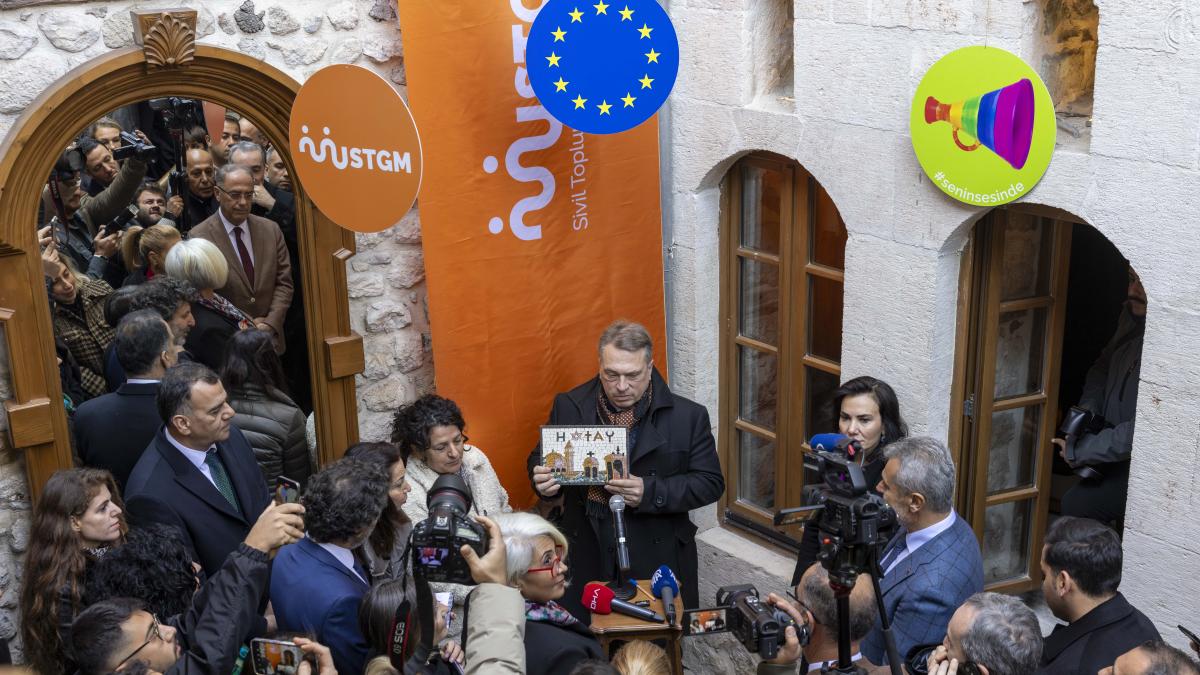
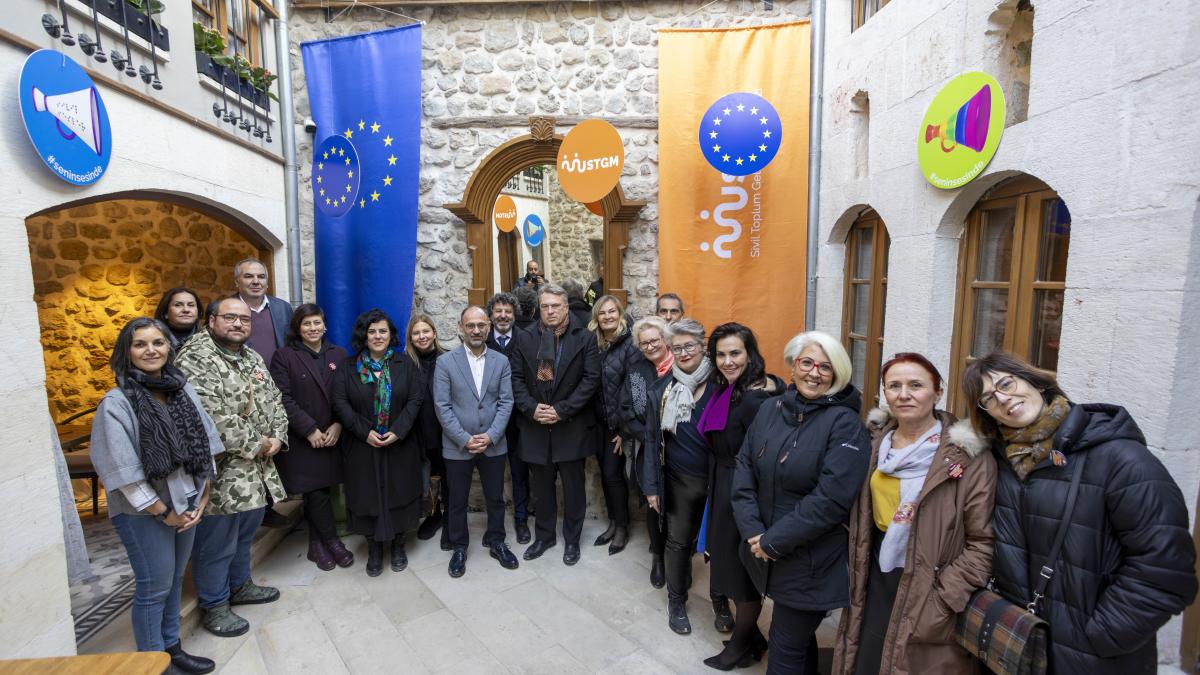
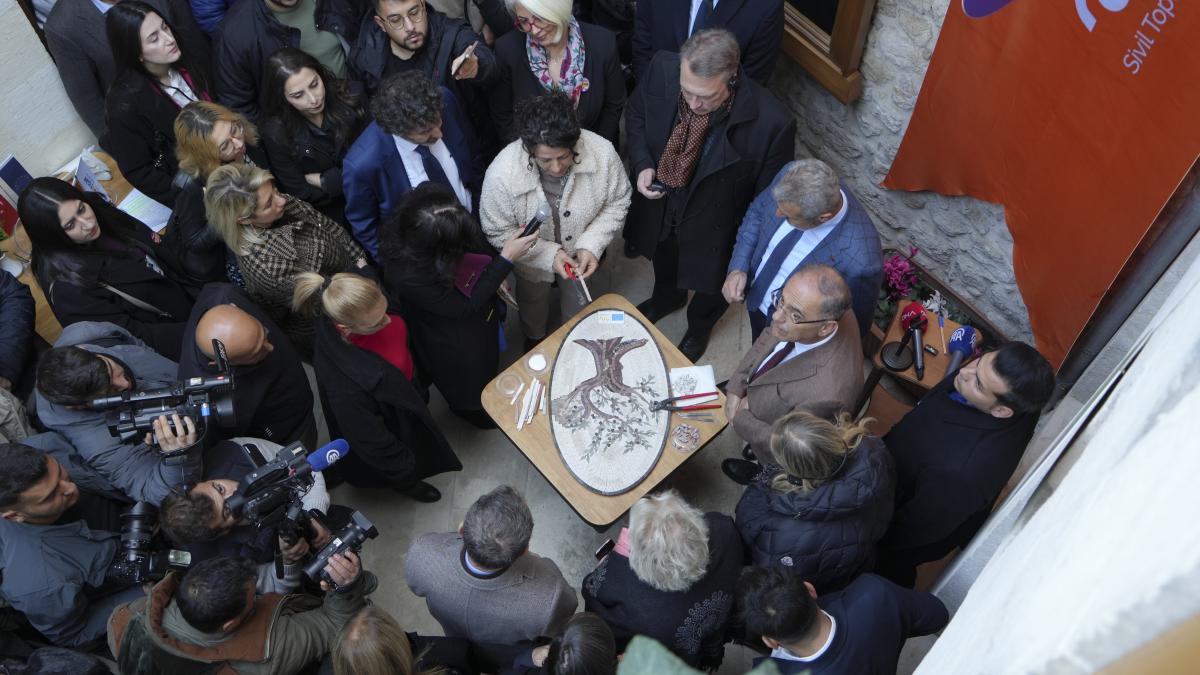
Canan: It’s hard to pick out just one collaboration from this year; because every gathering carried a story of some healing, of holding on again. Still, the day we first opened the office doors felt like the true beginning of that story. At the opening event, the coming together of civil society representatives and public institutions in the same courtyard wasn’t just a high turnout; it was a silent expression of the deep need to think and heal together.
Over time, meetings like the EU Turkey Delegation Structured Dialogue, the Columbia Global Hatay Resilience Fund, and the Antakya Municipality & CSO Gathering were natural continuations of this need. At these meetings, beyond the desire of civil society to access resources, the need to feel not alone became visible. At this point, the STGM Antakya Office became much more than just a tool. It became a common ground where CSOs could approach each other, make their voices heard, and imagine new possibilities together.
Each contact, greeting, and long conversation established on this ground carried the potential to turn into collaboration. Our efforts to bring together CSOs seeking to network and public institutions created not just technical matches, but bonds based on trust. The fact that these bonds gradually turned into concrete public–CSO collaborations was the most valuable and hopeful aspect of this process. Because every collaboration formed here was a quiet but powerful proof of the solidarity that is sprouting anew in Antakya.
Barbaros: The works that most affected me this year were those focused on culture and art. Through workshops, exhibitions, and collaborative production, it was exciting to see how much culture and the arts contributed positively to each participant’s well-being. These meetings made culture and arts, perhaps the only thing left in a city that had lost everything, even more visible.
The effort to create in impossibility is a great transformation
What has it been like to work in the field after the disaster, in a newly rebuilt order? How has this process changed you?
Canan: Being in the field after a disaster is extremely challenging emotionally and physically. The STGM Antakya Office is located right in the city center; many historic buildings around it have either been completely destroyed or are lost beyond recovery. Working in this space means witnessing the disappearance of a city while also dealing with the challenges of creating a new order.
But Antakya’s memory is not only in its buildings. Here, there is a culture that is extremely resilient when it comes to living. According to legend, Antakya has been destroyed seven times before and is now trying to rise again for an eighth time. My hope remains very strong that, with the struggle of civil society, Antakya will again become a livable place that’s peaceful and safe.
Barbaros: While working in the office, many plans were constantly changing according to the circumstances and resources were quite limited, requiring a reflex to produce solutions. Sometimes, the electricity would go out in the middle of an event, and sometimes the roads to the office would close just before a planned activity. In such moments, the only option was to communicate directly with construction workers in Antakya and come up with temporary solutions. Making things happen despite impossibility was nothing like the comfortable working conditions I was used to. That’s been one of the most exciting transformations for me.
What is your biggest dream or goal for the coming year? What do you hope for the future of civil society in Antakya?
Canan: During the acute phase of the earthquake, many national and international organizations were active in Hatay. Over time, projects were completed and many organizations left the region. This created both a gap and a new area of responsibility for local CSOs. Access to resources is still difficult; but I believe that the withdrawal of national and international actors from the field means local organizations have more opportunity to access funds.
Still, sustainability comes not only with funding but also with volunteer power and a minimum professional workforce. At this point, I hope that CSOs in Antakya will form stronger collaborations with public institutions and reach the resources they need. My biggest dream is for Antakya to regain standard living conditions.
Barbaros: My biggest dream is to see a structure where local organizations are strengthened; where they determine their own needs and priorities, generate their own resources, and as a result, transform society. We all know that resources from outside are not permanent—they are temporary. My greatest hope for this city in the coming year is for society to begin the healing process not through outside interventions, but gradually through its own inner strength.
“One of the places where healing begins”
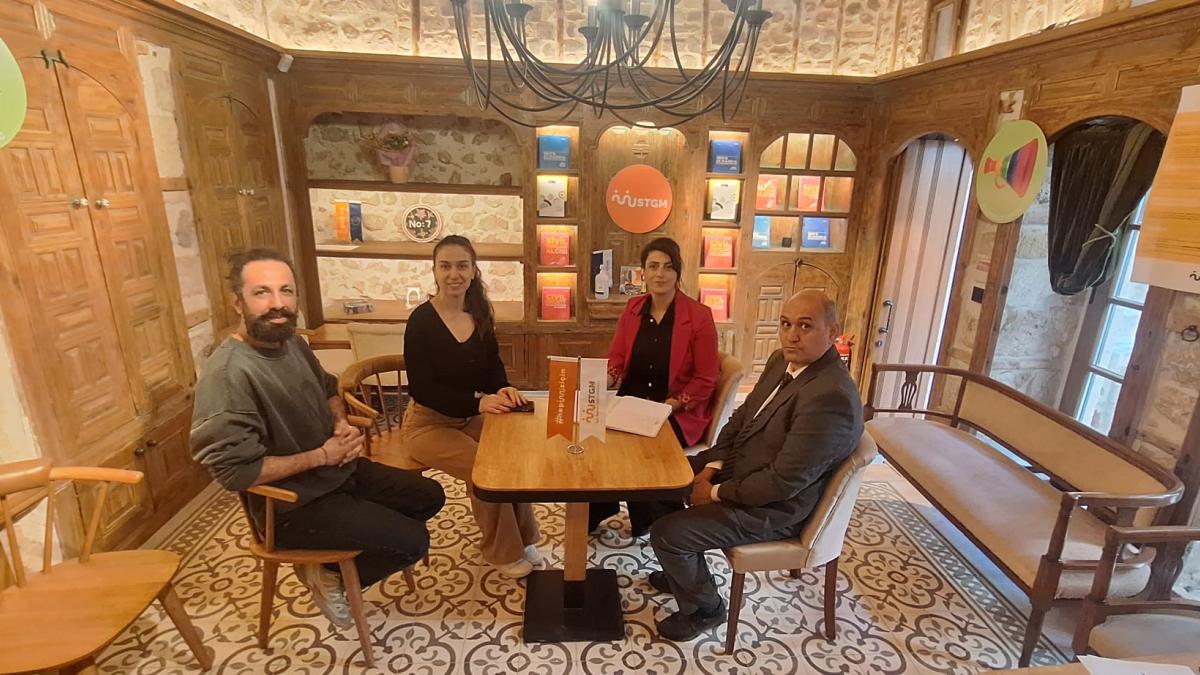
We describe our office as a ‘courtyard’. What is the thing you feel most strongly in this courtyard? Is it silence, crowds, or hope?”
Canan: The most dominant feeling for me in this courtyard is the smell of coffee. In Antakya, people go to each other’s homes for coffee, not tea. The bond between coffee and place is very strong. Coffee drunk in the garden of a house, by the Asi River, or in this courtyard all carries different emotions.
Even looking at yourself in the mirror in the courtyard brings a different feeling. And most importantly: as one of the few remaining structures from the old Antakya houses, the Antakya Office continues to be a symbol of hope that carries the city’s memory into the future.
Barbaros: Honestly, this courtyard is one of the places where I can breathe. Every time I open the office door, I ask myself whether I can be part of an action that contributes to the situation of the city today or witness one CSO supporting another. These questions have made the hope within me more concrete and alive. That’s why, for me, this courtyard has become one of the places where healing begins.