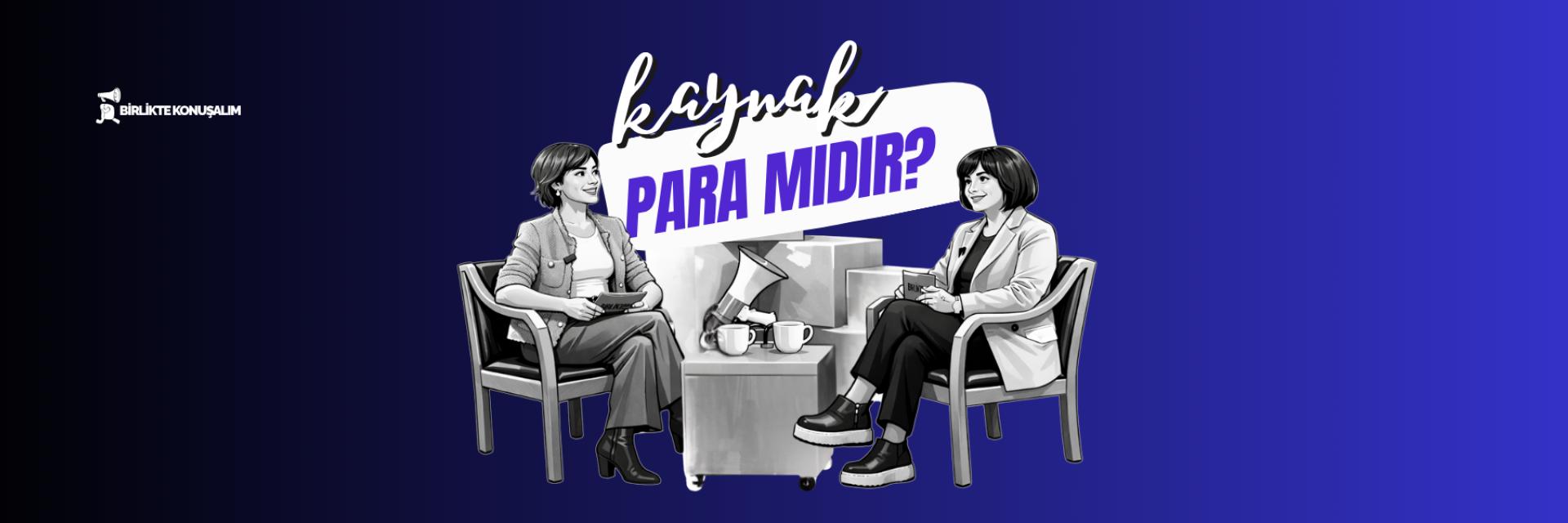

In the program hosted by Selin Berghan, we discussed the financial future of civil society and alternative pathways with Betül Selcen Özer, a seasoned expert in the field, through these critical questions:
- How will organizations survive when funding is cut?
- How can we turn one-time supports into a sustainable and loyal volunteer network?
- Beyond grants: Is it possible to establish a collective and creative resource development system?
Voices from the field: Who picked up the microphone?
In this episode where we brought the voice of civil society to the screen, we listened to the experiences of organizations working in different fields. In the section "Who Picked Up the Microphone?"; Pozitif İz, Kuzey Doğa Association, Ali Yavuzçehre Foundation, Couriers’ Rights Association, Hopa City Rights Association, and Köprücü Village Culture, Solidarity and Mutual Aid Association shared the problems they face in resource development and their proposed solutions.
Running for collective resources: The Adım Adım model
In the program, we also covered the success story of Adım Adım, which has transformed the culture of giving in Turkey through marathons. Adım Adım's founder Itır Erhat shared data on how a movement that started with a small group in 2008 has now reached over 110,000 volunteers and over a million donors.
Erhat emphasized that the biggest obstacle to individual giving in Turkey is the "lack of trust," highlighting that Adım Adım’s founding philosophy is built on "radical transparency." We heard how the initial prejudice that "no one collects donations in Turkey" was overcome through a transparent and accountable system.
The new face of solidarity: Destekle Değiştir
In the program, we also examined “Destekle Değiştir,” the Turkish adaptation of the global "Giving Circle" model, as a non-grant alternative for the financial sustainability of civil society. TÜSEV Programs Coordinator Tütengül Küçüker explained how this approach strengthens the community-centered understanding of philanthropy.
Küçüker noted that in this model, where CSOs convey their projects and the impact they will create to participants in 6-7 minutes, it not only generates resources but also improves organizations’ ability to express themselves and build networks.
ALİKEV: A model that turns pain into solidarity
In this episode of Let’s Talk Together, we also discussed the processes of transforming pain into social benefit with the Ali İsmail Korkmaz Foundation (ALİKEV). The foundation’s General Coordinator Deniz Umut Eker emphasized the importance of positioning the board of directors not as a symbolic structure but as an operational power in ALİKEV's sustainability. Underlining that the key headline of the foundation’s success is "accessibility," Eker explained the critical role of direct communication between the foundation's management and supporters in ensuring that messages reach the target audience quickly.
You can watch this episode, where we discussed the future, resilience, and transformation of civil society, on our YouTube channel.