


Organizational Development in Difficult Times Workshop at the Civil Voices Festival: Experiences of Organizations
Since February 2023, when the second implementation period of the BİRLİKTE Support Program began, we have been working on organizational development efforts with 25 participating civil society organizations for more than a year and a half. Both the organization representatives and the program team have devoted significant effort to this work, gaining valuable learnings and experiences. Of course, all these efforts are not happening independently of external conditions. Recently, these external conditions have been increasingly challenging and marked by overlapping crises. Although these challenges do not discourage our internal efforts within the organizations, they can significantly drain our energy. On the other hand, these difficulties can also serve as a catalyst for building new resilience and empowerment. As the program team, we frequently discuss these challenges and risks in our evaluations, brainstorm solutions, and strive to take measures that facilitate the processes and unlock bottlenecks.
Based on this background, we organized a workshop during the Civil Voices Festival on October 4–5 to better understand the experiences of organizations that are dedicating efforts to organizational capacity development and to learn from one another’s experiences.
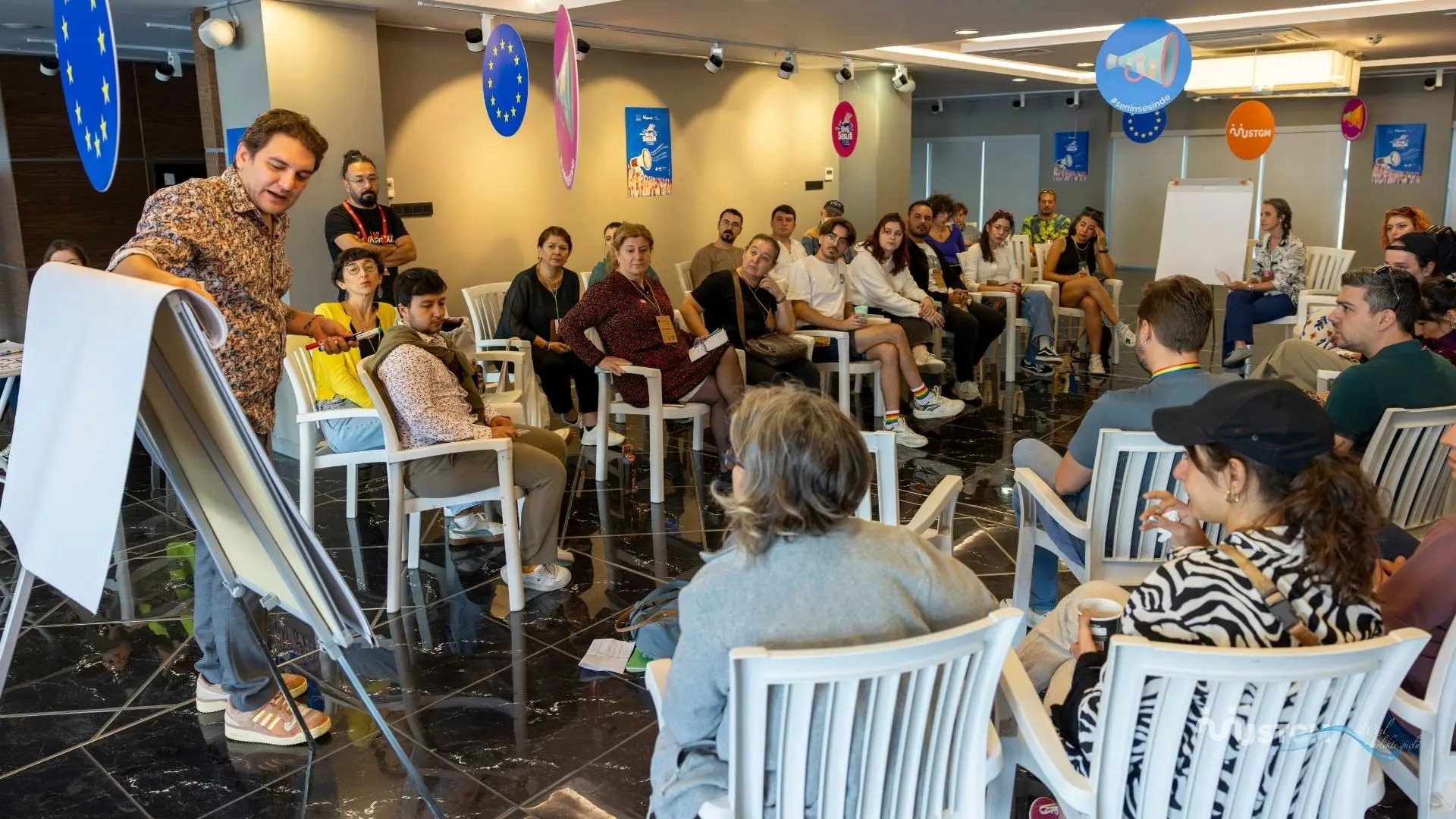
In the workshop, attended by 36 participants from 27 organizations, we focused on examining how institutional grants and capacity-building support contribute to organizational sustainability, how these supports are influenced by external factors, and how these effects can be mitigated. Our participants came from organizations with varying levels of experience in organizational development. This diversity provided an opportunity to explore the topic from multiple perspectives and fostered rich mutual learning.
How Do We Understand Organizational Development?
We started the workshop by asking what we understand by organizational development and what it means to us, and expressed the associations the concept evoked in our minds through a word cloud. Participants mainly defined organizational development through the following aspects:
- Organizational identity and structure: Organizing appropriately under a unified identity in line with the mission and vision, and establishing a strong organizational data management system.
- Sustainability and transmission: Developing processes to ensure the organization operates independently and to maintain organizational memory and continuity, and building organizational systems.
- Collaboration and visibility: Interacting with stakeholders, ensuring accountability and reliability.
- Risk management and flexibility: Being able to sustain and protect organizational goals during crisis periods and being prepared for such times.
- Well-being of members, employees, and volunteers: Empowering, enabling, and protecting the well-being of organizational people.
- Ability to create impact: The power and competence to realize the organization’s dreams and goals.
Key Factors Challenging Organizational Development: External Factors
We then discussed the external factors that shape and sometimes hinder organizational development processes. Participants shared that many factors such as political dynamics, public reactions, polarization, the erosion of social dialogue platforms, economic instability, increasing competition conditions, states of war, natural disasters, and similar crisis situations, as well as the approach of funders toward civil society, create serious challenges in this process.
Participants emphasized that while coping with such diverse difficulties, organizations need to develop different strategies and particularly shared ways to enhance resilience. For example, organizations sometimes have to shape their projects according to funders' priorities, which can lead them away from their core missions. However, organizations that can proactively manage these challenges are able to develop innovative strategies that strengthen their resilience.
What Tactics Did We Use During Crisis Periods? What Did We Learn?
The third focus topic of the workshop was the methods and tactics organizations used to increase the functionality of organizational development efforts during crises and difficult times. The experiences we discussed with examples are as follows:
- Flexibility, adaptation, and digitalization: Rapid digitalization of activities and adapting to new conditions with an agile approach during crises like the pandemic was highlighted as very important.
- The power of inclusive and collective action: In times of crisis, collaboration, solidarity among organizations, focusing on common goals, and especially supporting each other through peer learning proved to be very beneficial.
- Communication strategy, rapid interaction, and volunteer mobilization: Having a strong communication network with internal and external stakeholders is critical, especially during crises. Organizations that manage volunteer communication and relations well encounter relatively fewer difficulties in reaching their target audiences during challenging times.
- Risk analysis and preparedness: Conducting risk analysis is crucial for being prepared for crises.
- Transparency and trustworthiness: Being a reliable and transparent organization during crises provides a significant advantage in securing support and funding. For exactly this reason, organizational steps taken in this area are highly meaningful and important.
- Inclusiveness: It was noted that as organizations become more inclusive, expand their boundaries, and adopt a rights-based perspective in their activities, they become even stronger.
- Approach and flexibility of support programs: The flexibility provided by financial or technical support programs utilized during difficult times and crises is very important. In particular, institutional grants offer freedom for organizations to shape financial support according to their needs, especially in disaster situations like pandemics and earthquakes.
Why Organizational Development Despite All Challenges?
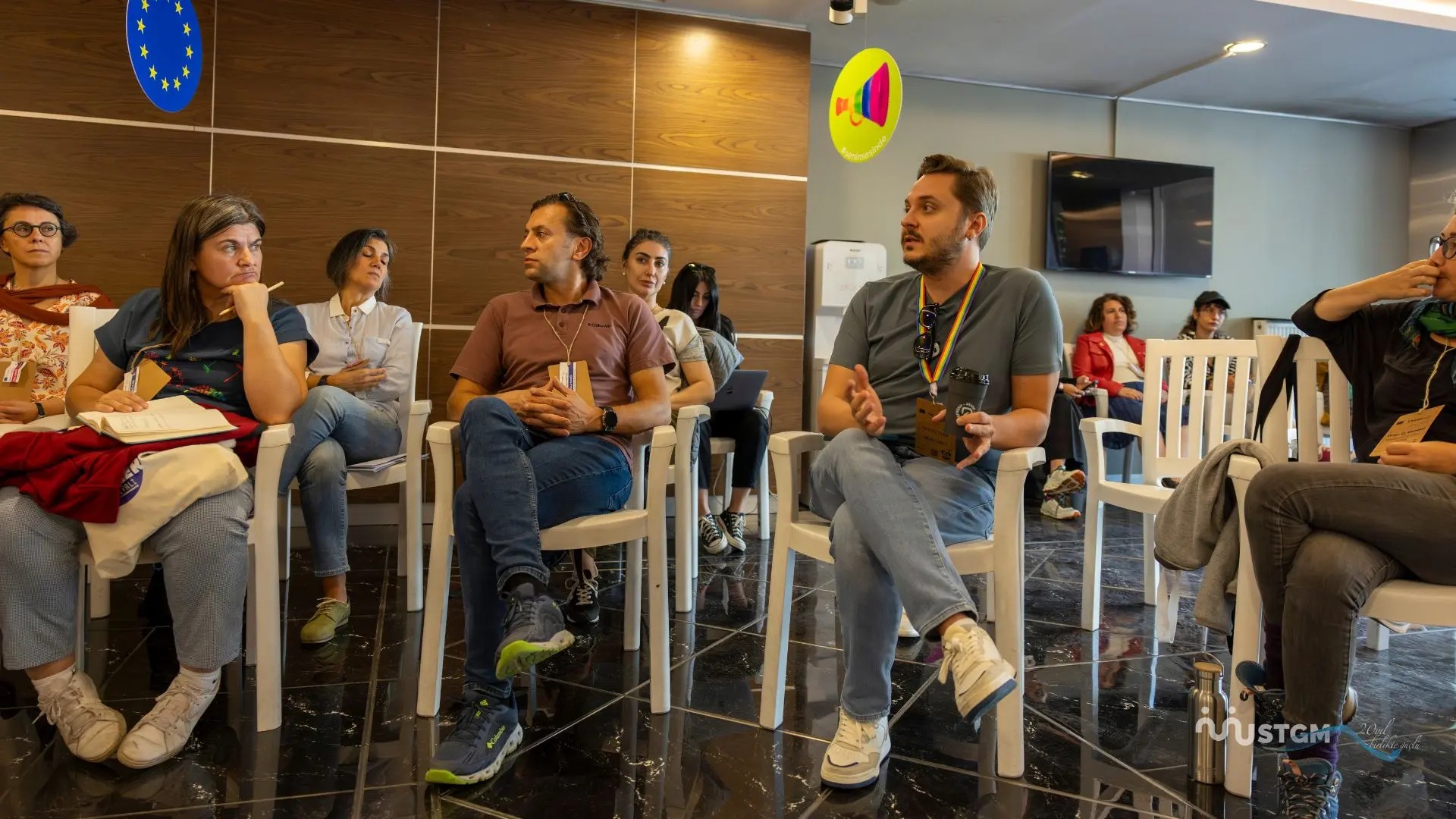
In this workshop, our intention was to understand what organizational development efforts bring to organizations despite the challenges they face. In this context, we compiled the following insights from the participants' responses to the discussion question. Of course, these do not cover everything that was discussed or all the examples shared during the workshop, but they offer us important ideas regarding the main themes where these gains converge.
- Organizational development efforts conducted with the facilitation of an external facilitator and through specific methods and tools significantly contribute to fostering a culture of systematic and planned work within the organization. Advancing through the facilitation of an external perspective and a structured process boosts the organization's motivation to work.
- Organizational development efforts support organizations’ visibility and accountability, paving the way for them to reach broader audiences. Trust in the organization increases, which also contributes to relationships with all stakeholders and the public.
- Strengthening an organization organizationally boosts its self-confidence, which in turn has an encouraging effect both on its external actions and in building relationships.
- It contributes to the development of organizational policies and facilitates approaching them in a deeper and more participatory manner.
- It supports managing the organization's internal relationships with its staff and contributes to organizational well-being.
- It fosters the improvement of organizational governance and enables internal decision-making mechanisms to be handled in a more participatory way. It creates a more collective basis for discussion, decision-making, implementation, and production within the organization.
- It enables us to realize that the development process within an organization is never-ending. This awareness facilitates understanding the importance of organizational learning. It provides an opportunity to experience how thinking about and investing effort in monitoring, evaluation, and learning processes, as well as implementation processes, contributes to the organization.
For a civil society organization, it is no easy task to simultaneously engage with the social issues it addresses and at the same time reflect on its own organizational capacity, take it seriously, and make long-term investments in this area. It requires resources, motivation, commitment, and perhaps sometimes even a bit of stubbornness. Moreover, when we add internal organizational factors to the external conditions discussed in the workshop, it becomes clear that internal challenges are also not to be underestimated.
Nevertheless, despite – and indeed because of – all these challenges, investing in and working for organizational capacity and strengthening is meaningful and important. For exactly this reason, we say: let's continue to experience this TOGETHER (BİRLİKTE) without giving up.

Subscribe to STGM Youtube Channel!
On the STGM YouTube Channel, you can find various tutorials, presentations and current discussions on civil society. Check out our channel now and subscribe.