


An Eight-Year Journey with BİRLİKTE
We closed the second term of BİRLİKTE this past summer. During the interim, we compiled and collected the experiences and learnings we gained, while also spending considerable time thinking, writing, and drawing about what we could do to further support the field in the coming period. Now, as we stand on the threshold of a new journey, we want to share these experiences and evaluations with you. In the coming days, we will also present our more detailed notes for your attention. For now, I will only touch upon certain highlights—especially the practices we believe made a difference in our approach and methods.
First, let's briefly recall what we did with BİRLİKTE. In the program, which we launched in 2017 as the first EU-funded institutional grant program, we supported almost 70 civil society organizations across two cycles. While providing institutional grants to organizations operating with a rights-based approach so they could cover their core costs, we also implemented a one-to-one mentorship program focused on developing their organizational capacity to make their structures more resilient.
Why did we focus on organizational strengthening and resilience?
The second support function of our program—the institutional development process focusing on organizational strengthening and resilience—has become an increasingly indispensable area for organizations in today’s world. Indeed, the changing and ever more uncertain social and political external conditions, which we find harder and harder to make sense of globally, bring with them the need for organizations to focus more on their resilience. The pressure to analyze our methods for organizing, decision-making, coordination, taking action, accessing resources, and reaching society, as well as the need to manage changing conditions and make use of opportunities more efficiently, is increasing.
In a world where we witness the devastation of universal principles and values, how will civil society organizations, which are devoted to creating value at a societal scale and work with a rights-based approach, withstand these pressures? How can they sustain themselves while continuing to act and without giving up on their values?
In our institutional development work with organizations in the program, we sought answers to these questions together. Sometimes the challenges and hardships felt so heavy for all of us that all we could wish for was to get away from everything. But there were also moments when a brilliant idea, a timely support, or a facilitating method became the solution to problems we thought were insurmountable.
So, why are institutional grants important?
Institutional grants provided to organizations for two-year periods are critical for precisely this reason. This financial support provides the mainstay for rights-based organizations struggling due to shrinking funding sources, allowing them to keep moving forward. It helps cover rapidly increasing rents, labor costs, and other fixed expenses. Moreover, during crises, its flexibility enables organizations to address urgent needs. We sadly experienced this after the earthquake disaster at the beginning of the program's second term. At that time, this institutional grant provided a small breathing space for the organizations affected by the disaster and benefiting from the program.
What did the innovations in the second implementation period bring us?
One of the innovations we introduced in the sub-grant budget during the program’s second period was to set aside a dedicated budget that organizations could use for their institutional development. Our experiences showed that this budget was functional and greatly relieved organizations for key items—like strategic planning retreats and experience-sharing workshops—for which they often struggled to find resources. These organizational retreats nurture organizational culture and open space for organizational wellbeing. In most cases, they create a much more meaningful impact than the many desk-based activities done for institutional development. Moreover, since this budget is directly managed by the organization itself, it is empowering for ownership and learning.
We have another important takeaway regarding the financial support provided: The quality of technical support and the approach that accompanies the grant process in sub-grant programs are decisive for the ultimate benefit that support can provide. We must also look at how we deliver the support we designed to make life easier for organizations. For programs to be effective, organizations must have access to a responsible, competent, and communicative team they can easily contact, seek advice from, and solve problems with, so they can conduct their processes in accordance with regulations and financial reporting rules. This must be reflected in the planning, without overlooking the considerable effort these needs require. Also, remember that a grant is a tool—not the end. If the aim is to support the organization, then it’s important to treat accountability and transparency requirements in reporting as perspectives that will strengthen the organization. Centering a relationship that does not compromise on principles while focusing on organizational strengthening and recognizing different needs makes a real difference for program implementers. As STGM, we believe we have made that difference.
New solutions for new needs: BİRLİKTE Institutional Development Model
One of the most significant outcomes of this 8-year journey with BİRLİKTE has been the Institutional Development Model we developed for the program. We applied and continually updated this model throughout both implementation periods, in our own work and with the organizations that journeyed with us.
One of the key innovations in the second implementation period was integrating gender equality into every component of the model, further reinforcing its relationship with rights-based principles. Our experience here led to meaningful learning and successes. Very soon, we will also publish a practical guide for Mainstreaming Gender Equality in Civil Society Organizations, compiling and summarizing these experiences.
The institutional development model is accompanied by a self-assessment tool. This tool offers organizations a valuable opportunity to review their own internal processes as they strive for equality and inclusion. The method we used for self-assessment is somewhat labor-intensive for organizations, especially at first. However, as the process continues and tools become more familiar, ownership rises accordingly. The trust and mutual understanding built with the program and the mentors transform self-assessment from a burden into a real experience full of productive discussions with high value for the organization. In participants’ program evaluations, self-assessment was among the most cited practices in terms of benefit for the organization. This model and its related tools will continue to provide a reliable basis for the programs we will implement in the future.
A center-stage approach focusing on organizations, based on autonomy and equality
The institutional development support provided by BİRLİKTE is based on a very close working principle with organizations. The institutional mentorship program we developed, based on STGM’s working practice with organizations and its institutional principles and approaches, has taken on a very unique character after two implementation periods. So, what is it that makes this approach different?
The mentoring support provided here places the supported organization as the central actor in the relationship. While the program mentor provides close accompaniment, they respect the organization’s autonomy and boundaries. The principle of “do no harm” is prioritized. The mentor does not act in place of the organization, but creates space for the organization to act itself and facilitates processes. They are open to learning, understanding, and truly transforming. When considering support, they take context, timing, and other external conditions into account. They try to reflect this in all organizational processes. This is the mentoring approach shaped within such a framework. Of course, there may still be times when the compass wavers, but during such times, the ability to self-reflect and a culture of solidarity within the team help overcome difficulties.
Indeed, one of the most significant opportunities BİRLİKTE has opened up for us and for organizations might be its potential to question and transform the ways we relate: it makes us reflect on and create space for how the individual relates to the organization and their work, how individuals interact within organizations, how organizations relate to each other, and how organizations engage with civil society and broader audiences—challenging and questioning existing forms, and ultimately strengthening both individuals and organizations through this transformative process.
Why do I go on at such length about all this? Perhaps I am simply enjoying writing a blog post. We will, of course, separately share what happened in the institutional development process, what we learned together with organizations, what we achieved, and where we fell short. But I believe that every chance should be taken to highlight the care, effort, and sense of responsibility in the background, much of which goes unsaid.
At the beginning of my post, I mentioned that we compiled and collected the experiences from this process. In the coming days, we want to share the topics I tried to cover here more comprehensively with you. We think these exchanges could inspire our friends we walk alongside from organizations running similar programs, as well as civil society organizations themselves, and that they could offer new perspectives when identifying problems and seeking solutions. We value a working culture that places solidarity and sharing over competition, and see leaving accumulated experience on the ground by testing and implementing new models in the field as an opportunity.
So what is the most important thing I learned on this journey?
When a committed community comes together around a common goal and runs a process rooted in values through genuine relationships, regardless of the outcomes, they always leave behind a meaningful and transformative experience. As we look toward the new term, being able to recall the past with a feeling of "We’re glad we did it, we did it well" will be the gift of all the effort, the connections made, and the roads traveled together.
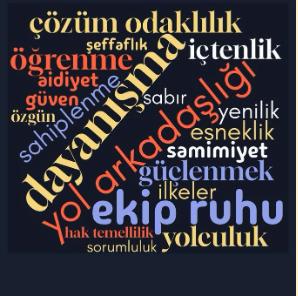
*This word cloud was formed with the words distilled from the shared experiences and values of the BİRLİKTE team.


Subscribe to STGM Youtube Channel!
On the STGM YouTube Channel, you can find various tutorials, presentations and current discussions on civil society. Check out our channel now and subscribe.